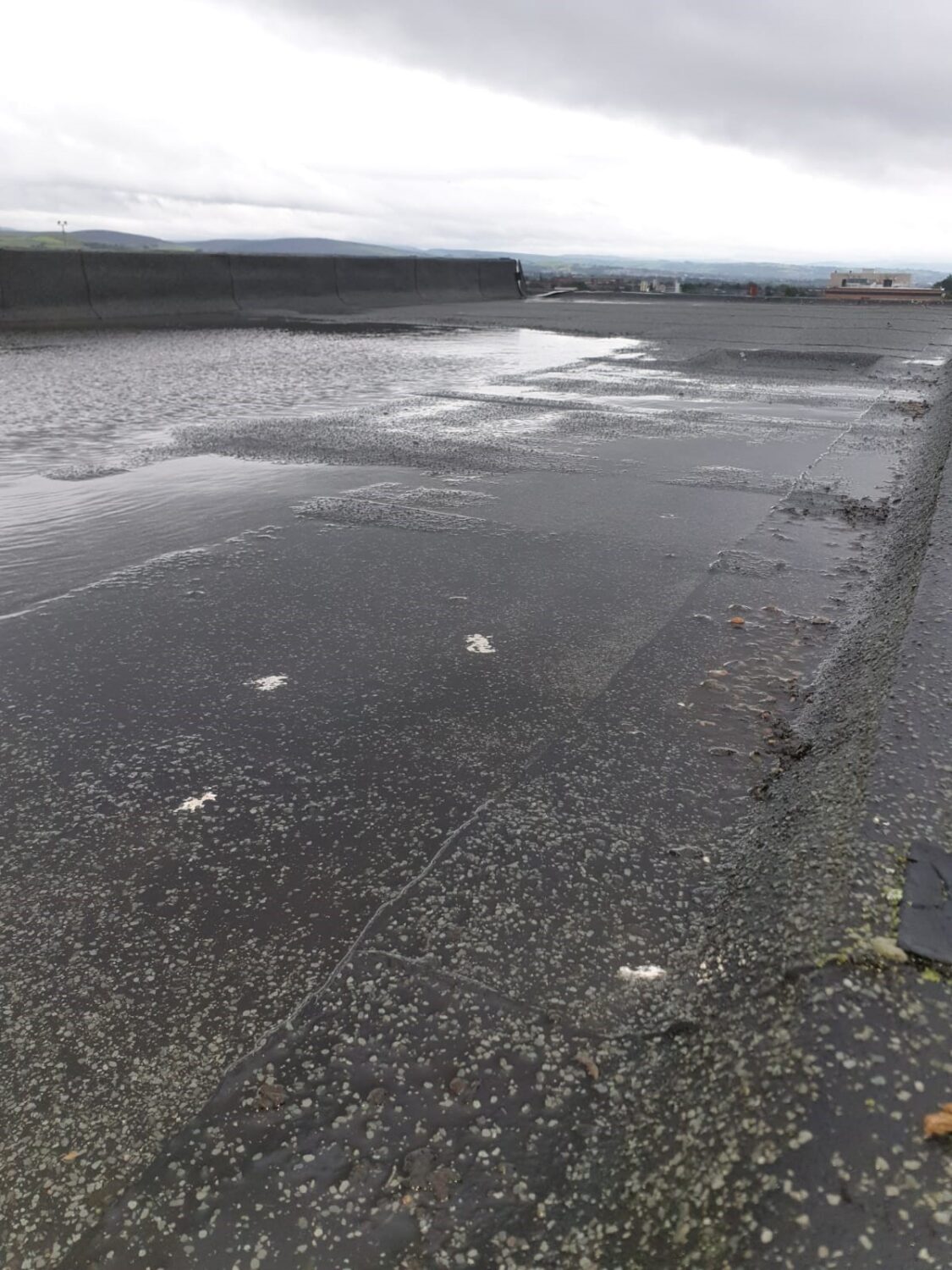
From the ground, a flat roof can look perfectly sound. No visible splits. No pooled water. No obvious leaks.
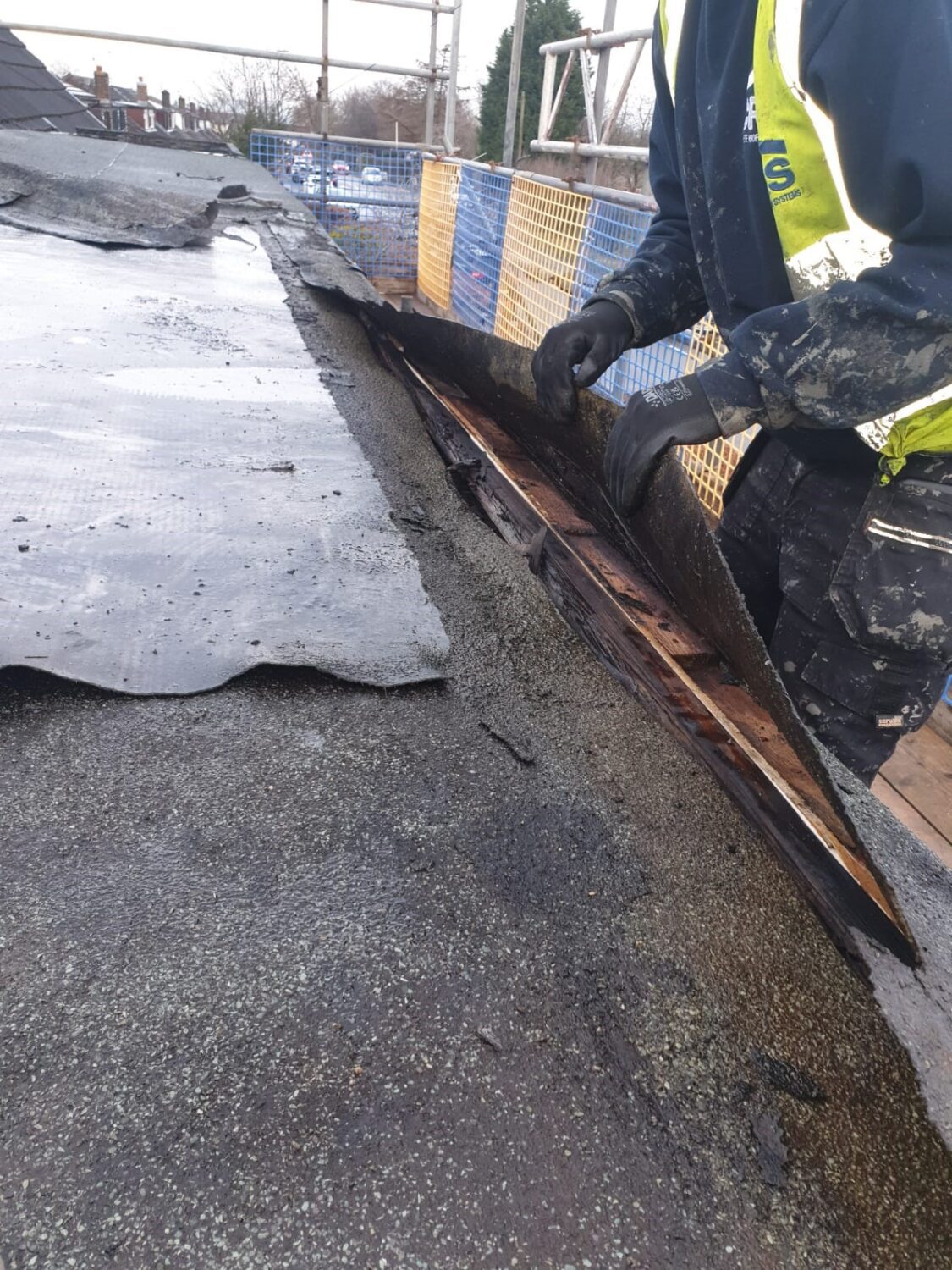
But in many UK buildings, serious roof damage is already developing out of sight, trapped deep within the roof build‑up.
This is where moisture mapping plays a critical role in modern roof maintenance.
Used correctly, moisture mapping allows roofing professionals to identify hidden water ingress, saturated insulation and emerging failure points long before they become disruptive internal leaks or costly structural problems.
Why Roof Leaks Rarely Start Where You See Them
Water rarely behaves in a straight line, and that’s one of the biggest challenges with flat roofs.
Moisture can enter through a failed joint, outlet or flashing, a tiny membrane defect and/or a saturated upstand or parapet junction, among other possibilities.
From there, it can travel within the roof build‑up, sometimes up to several metres, before finally appearing as staining or drips inside the building. This is why internal leak are frequently a late‑stage indicator, not the first sign of a problem overhead.
CRS explores this in more detail in our article on how roof leaks really start, where we explain how minor defects escalate, out of sight, over time if left undetected.
What Is Moisture Mapping?
Moisture mapping is a non‑destructive roof surveying technique used to detect and plot hidden moisture within flat roof systems.
Rather than relying on guesswork or isolated inspections, moisture mapping:
Scans the roof in a structured grid pattern
Identifies relative moisture levels across the entire surface
Produces a clear visual “map” showing wet and dry zones
This approach is widely used across the UK roofing sector to inform targeted repairs, extend roof lifespan and avoid unnecessary wholesale replacement .
How Moisture Mapping Works in Practice
Most professional moisture surveys use electrical impedance scanning, a proven method for locating trapped moisture beneath waterproofing layers.
Tools such as the Tramex Dec Scanner* generate a low‑frequency electrical signal that reacts differently depending on moisture levels below the surface. Areas containing excess moisture return higher readings, allowing wet zones to be accurately identified without damaging the roof membrane*.
When used by trained operatives, this method allows:
Swift inspection coverage of large flat roof areas
Detection of moisture to a depth of around 150mm
Testing during normal building operations, without disruption

Why Hidden Moisture Is Such a Serious Risk
Trapped moisture doesn’t just cause leaks. It creates compounding problems that accelerate roof failure:
1. Loss of Thermal Performance
Wet insulation can lose a significant proportion of its thermal resistance, increasing heat loss and energy costs over time.
2. Structural Deterioration
Persistent moisture can lead to timber decay, corrosion of metal decks and fixings, and long‑term weakening of roof structures and often without early visible warning signs, as we’ve mentioned before.
3. Reduced Roof Life
BS 6229:2025 clarifies that ongoing moisture within roof systems is a key contributor to premature failure and avoidable replacement costs if not managed through planned inspection and maintenance (BSI Group).
Moisture Mapping and UK Best Practice
UK best practice standards emphasise planned inspection and early intervention, particularly for flat roofs exposed to ponding water and thermal movement.
BS 6229:2025 stresses the importance of:
Regular roof inspections
Maintaining dry insulation
Identifying moisture before it leads to system failure
Moisture mapping supports this approach by providing evidence‑based data that can be used to prioritise repairs and maintenance budgets effectively (BSI Group BS 6229 :2025).
When Should You Consider Moisture Mapping?
It can be particularly valuable to use moisture mapping when:
A roof is approaching mid‑life and ongoing performance needs to be assessed
There are recurring leaks with no obvious source
Refurbishment or overlay works are being considered
Asset owners want to avoid unnecessary full roof replacements
By identifying exactly where moisture is present, and where it isn’t, repairs can be focused precisely where they’re needed, reducing cost and disruption.
Seeing What Ground‑Level Inspections Can’t
Visual inspections alone cannot reveal what’s happening beneath the waterproofing layer. Moisture mapping allows building owners and facilities teams to see the unseen, turning uncertainty into informed decision‑making.
At Complete Roofing Systems, moisture mapping forms part of a wider, practical approach to roof maintenance, helping our clients extend asset life, control risk and avoid preventable failures.
If you’re responsible for a flat roof and want clarity on its true condition, moisture mapping is often the smartest place to start.